Earth, hemp, dung — three plants, one home.
Three carbon-negative ways to build a home. Each uses what the land already gives — mud, hemp or cow dung — and out-performs cement on comfort, health and cost.

Cement is the second-most consumed substance on Earth — after water.
Every tonne of cement releases nearly a tonne of CO₂. The Indian construction boom alone accounts for 8% of global emissions. Yet for 8,000 years our ancestors built homes that lasted centuries — cooler in summer, warmer in winter, gentler on the wallet and the planet. These methods aren't relics. They're the only honest answer.
Of global CO₂ emissions come from the construction sector
CO₂ released per tonne of Portland cement produced
CO₂ absorbed per m³ of hempcrete over its life
Average cooling effect of mud/dung walls vs. RCC in Indian summers
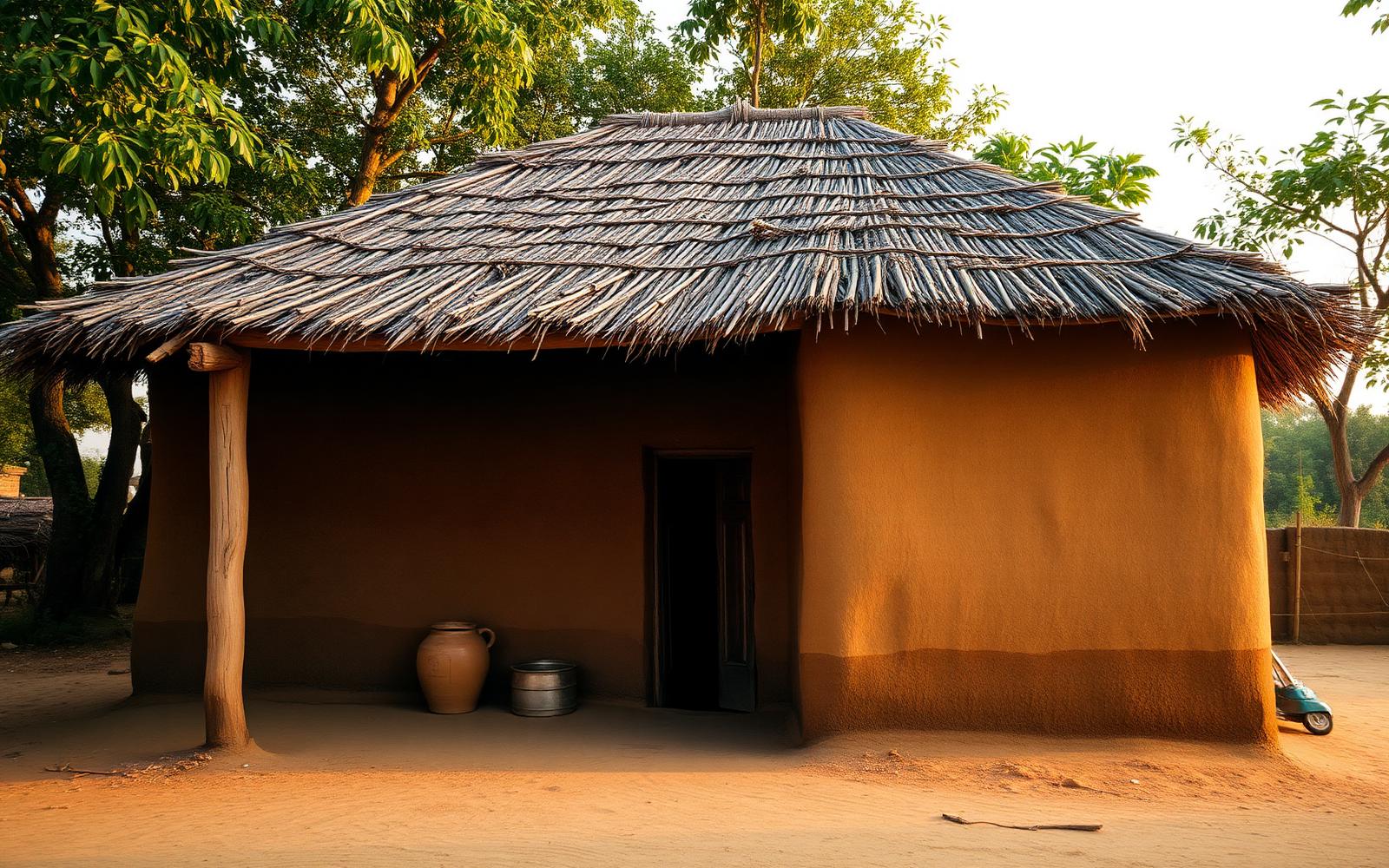
Mud House (Cob & Adobe)
Mitti ka ghar — 8,000 years old, still the warmest.
Walls built from a mix of clay-rich subsoil, sand, straw and water. Cob is hand-sculpted wet; adobe is sun-dried bricks. Wattle-and-daub uses a bamboo lattice plastered both sides with mud.
Sources & materials
- Clay-rich subsoil (free, from the site)
- Sand (drainage & crack control)
- Chopped straw or jute fibre (tensile strength)
- Cow dung (binder + insect repellent in plaster)
- Lime or jaggery water (waterproof finish coat)
- Bamboo or wooden poles (roof, reinforcement)
Benefits
- Indoor temperature stays 6–8 °C cooler in summer, warmer in winter — zero AC
- Walls breathe — no damp, no mould, regulates humidity naturally
- Fire-resistant, earthquake-resilient (when properly buttressed)
- 100% biodegradable — returns to soil at end of life
- Mud is free; whole house costs less than the cement of a brick house
How to build — 5 steps
Jar test for clay/sand/silt ratio. Aim for 15–30% clay.
Stone or rubble plinth 60 cm above ground — keeps walls dry.
Stomp cob with bare feet, lay 30 cm high lifts daily, let cure between.
Bamboo + thatch, Mangalore tile or terracotta — wide overhang protects walls.
3 coats: mud-dung base, lime-sand middle, lime wash final. Lasts 30+ years.
Cost
₹400–900 per sq ft (vs. ₹1,800–2,500 for RCC)
Best fit
Dry & semi-arid climates (Rajasthan, MP, Karnataka interior, Deccan). Excellent for retreats, farm dwellings, schools, gaushalas.
Things to plan for
- • Heavy rain regions need very wide eaves & strong plinth
- • Labour-intensive — best built community-style or self-built
- • Bank loans rarely available; insurance options limited
Hempcrete
Carbon-negative walls that absorb CO₂ for a century.
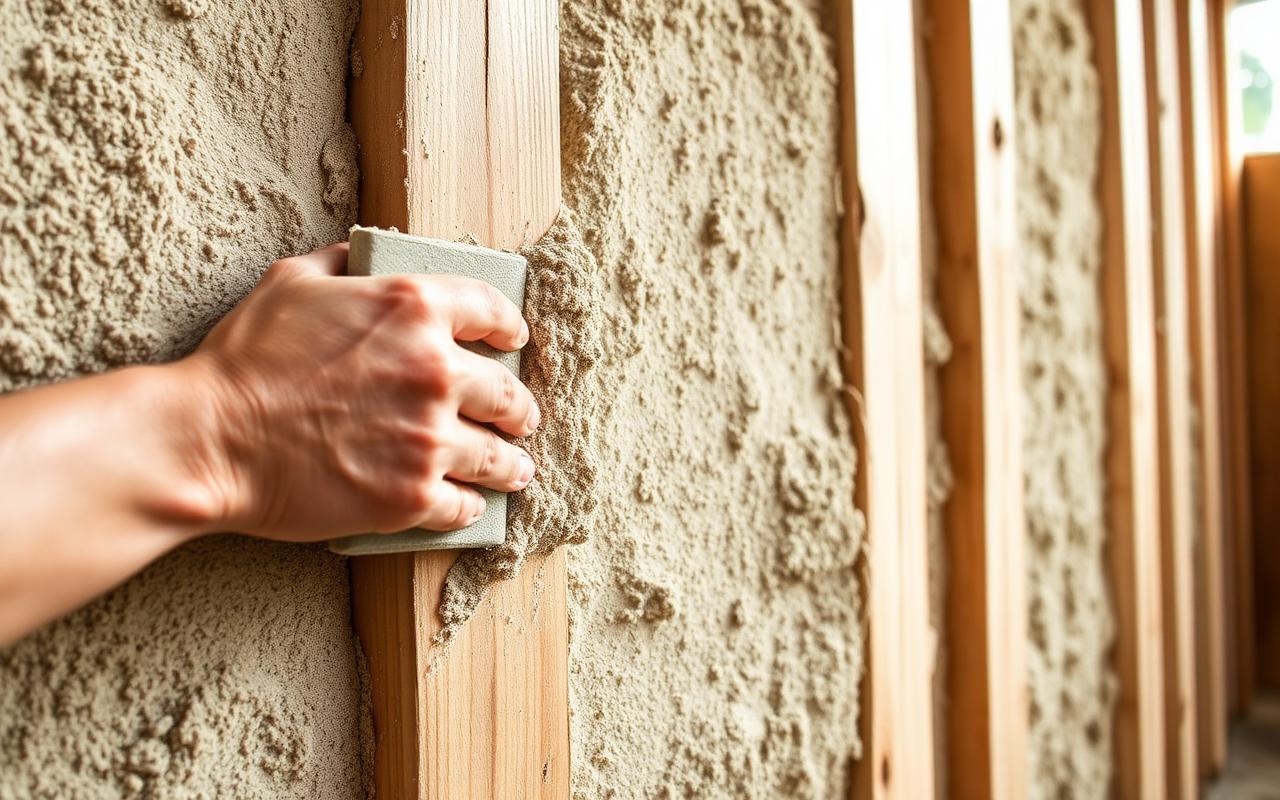
A breathable composite of hemp hurd (the woody inner stalk), hydrated lime and water. Cast in formwork around a structural timber or bamboo frame. Not load-bearing — it's insulation and mass combined.
Sources & materials
- Hemp hurd / shiv (the chipped inner stem)
- Hydraulic lime or lime + pozzolan binder
- Water
- Structural frame: timber, bamboo or steel
- Lime plaster for finish (inside & out)
Benefits
- Absorbs 165 kg CO₂ per m³ over its lifetime — the wall is a carbon sink
- R-value ≈ 2.5 per inch — excellent thermal insulator in all climates
- Naturally fire-resistant, pest-proof, mould-proof
- Vapour-permeable — no condensation, ideal for humid coasts
- Lifespan 100+ years; recyclable as soil amendment at demolition
How to build — 5 steps
Build a load-bearing timber/bamboo skeleton on a damp-proof plinth.
Plywood shutters either side of frame, 25–40 cm wall thickness.
4 parts hurd : 1 part lime binder : 1 part water. Fluffy, not soupy.
Pour into form, tamp lightly — over-compaction kills insulation.
Strip forms after 24 h. Cure 4–6 weeks. Finish with breathable lime plaster.
Cost
₹1,200–1,800 per sq ft. Cuts heating/cooling bills 50–70% for life.
Best fit
All climates — best where insulation matters: Himalayas, hill stations, hot-humid coasts, A/C-heavy cities.
Things to plan for
- • Needs a structural frame — it's infill, not load-bearing
- • Hemp hurd supply still limited in India (industrial hemp licences improving)
- • Slightly higher upfront cost than RCC, recovered via energy savings
Gocrete (Cow-Dung Concrete)
Indian-invented bricks that out-insulate cement at 1/7 the carbon.
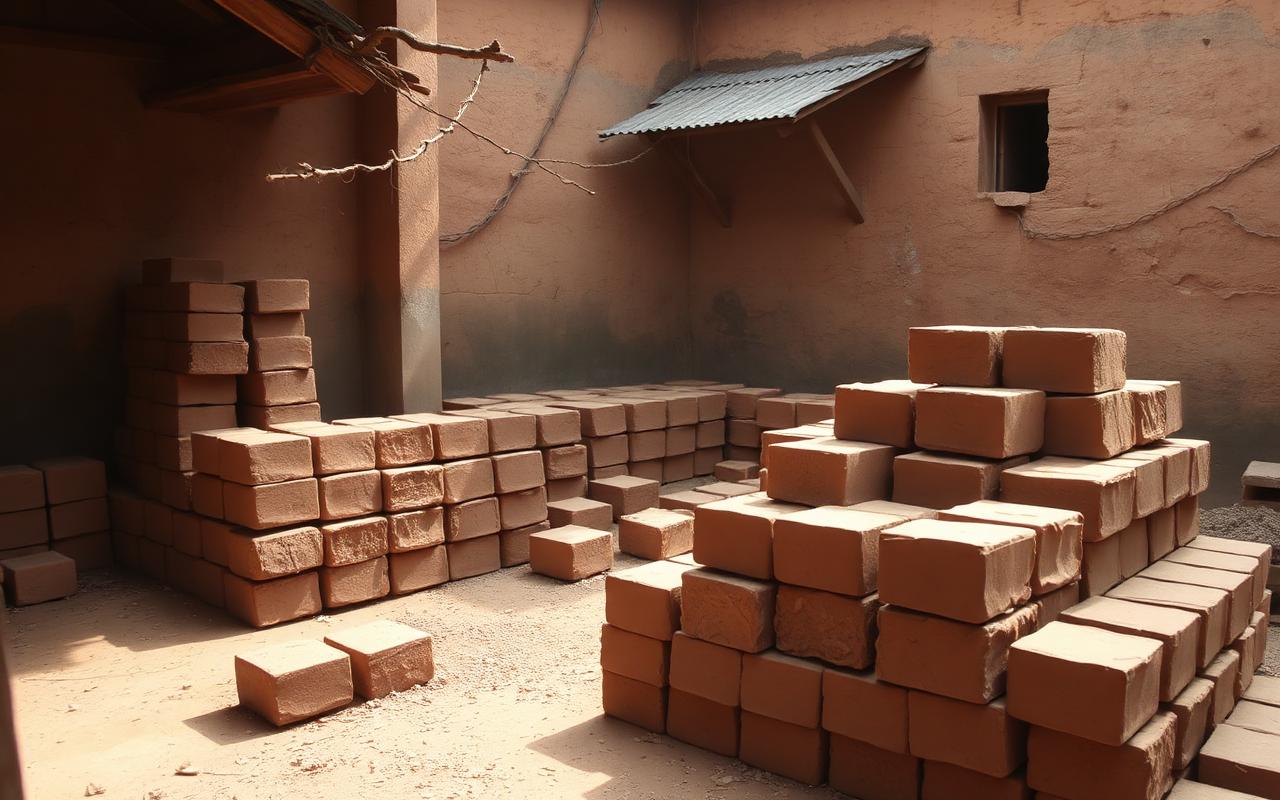
A patented formulation by Dr. Shiv Darshan Malik blending cow dung, lime, gypsum, guar gum, clay and natural minerals into Vedic plaster and Gocrete bricks. Cured naturally — no kiln, no cement, no steel.
Sources & materials
- Desi cow dung (gir / sahiwal preferred for higher dry matter)
- Lime
- Gypsum
- Guar gum (natural binder)
- Clay & sand
- Optional: rice husk ash, bhabhar fibre
Benefits
- 7× lower embodied carbon than fired clay brick or cement
- Naturally radiation-shielding & EMF-dampening (per IIT studies)
- Antibacterial & antifungal — cow dung's traditional property
- Keeps interiors 5–7 °C cooler — proven in Haryana & Rajasthan builds
- Gives gaushalas a revenue stream — saves desi cows from slaughter
How to build — 5 steps
Fresh dung sun-dried 2–3 days to optimum moisture.
Dung + lime + gypsum + guar gum + clay in measured ratio (Gaushala license teaches exact formula).
Press into brick or panel moulds, or apply directly as wall plaster.
Air-dried 7–14 days — no firing, no fuel, no emissions.
Mortared with same mix. Walls finished with Vedic plaster — smooth, antimicrobial.
Cost
₹600–1,000 per sq ft. Bricks cost ₹15–20 vs. ₹8 fired — offset by zero cement & zero plaster.
Best fit
Anywhere with desi cattle access. Outstanding for gaushalas, eco-resorts, farm housing, schools and temples.
Things to plan for
- • Needs steady dung supply (1 desi cow → ~50 bricks/month)
- • Wet-monsoon coastal humidity needs lime-rich finish coat
- • Trained masons still scarce — Gocrete training courses run in Rohtak
Bamboo Structures
Green steel — stronger than mild steel, grows back in 4 years.
Engineered bamboo construction uses treated, jointed culms (mainly Guadua, Moso, Bambusa balcooa & Dendrocalamus) as load-bearing columns, beams, trusses and woven walls. Cured with borax-boric acid against borers; finishes range from rustic round-pole to laminated bamboo panels that look like premium hardwood.
Sources & materials
- Mature culms (3–5 yrs old) of structural species
- Borax + boric acid treatment bath (insect & fungus proofing)
- Steel/bamboo gusset joints, M.S. bolts or rope lashing
- Lime or mud plaster for wattle-and-daub walls
- Laminated bamboo boards for floors, doors & furniture
- CGI / clay tile / thatch roofing on bamboo trusses
Benefits
- Tensile strength rivals mild steel — earthquake & cyclone resilient
- Grows 1 metre/day; matures in 3–5 yrs vs. 25+ for hardwood
- Sequesters 35% more CO₂ than equivalent tree stand
- Treated structural bamboo lasts 50+ years (Bali, Colombia, Kerala proofs)
- Light: same-span bamboo frame is 1/4 the weight of steel — cheaper foundations
- Local livelihood — 1 acre of bamboo supports a family year-round
How to build — 5 steps
Harvest culms aged 3–5 yrs in dry season — sugar low = pest resistance high.
Soak in 5% borax-boric solution for 7–10 days. Sun-dry vertically for 3 weeks.
Concrete or stone pedestals lift bamboo 30 cm off ground — never let it touch soil.
Bolted fish-mouth joints or bamboo-pin nodes. Cross-bracing on every wall plane.
Woven bamboo mat walls + mud/lime plaster, or laminated panels. Wide overhang protects from rain.
Cost
₹700–1,400 per sq ft for engineered structure (vs. ₹1,800–2,500 RCC). Pre-fab kits drop labour 40%.
Best fit
All warm/humid climates — outstanding for North-East India, Western Ghats, coastal Karnataka, Goa, Bali-style resorts, farmstays, schools and disaster-relief housing.
Things to plan for
- • Untreated bamboo dies in 3–5 yrs to borers/fungi — treatment is non-negotiable
- • Must stay off the ground and under wide eaves (no contact with rain/soil)
- • Skilled bamboo carpenters still concentrated in NE India, Kerala, Karnataka
Side by side — vs. RCC.
| Metric | RCC (cement) | Mud house | Hempcrete | Gocrete | Bamboo |
|---|---|---|---|---|---|
| Embodied CO₂ (kg/m²) | +250 | +10 | −108 (sink) | +35 | −60 (sink) |
| Cost ₹/sq ft | 1,800–2,500 | 400–900 | 1,200–1,800 | 600–1,000 | 700–1,400 |
| Interior temp swing | High | Very low | Very low | Low | Low |
| Lifespan (years) | 60–80 | 100+ (maintained) | 100+ | 80+ | 50+ (treated) |
| Demolition waste | Toxic rubble | Returns to soil | Soil amendment | Soil amendment | Compostable |
| Skill availability (India) | Everywhere | Rural traditional | Growing | Training centres | NE India, Kerala, Karnataka |
Watch real builds in action.
Building a Mud House
Cob construction step by step
Hempcrete Walls
Mixing, casting, finishing
Gocrete by Dr. Shiv Darshan Malik
Cow dung bricks & Vedic plaster
These methods aren't only for huts.
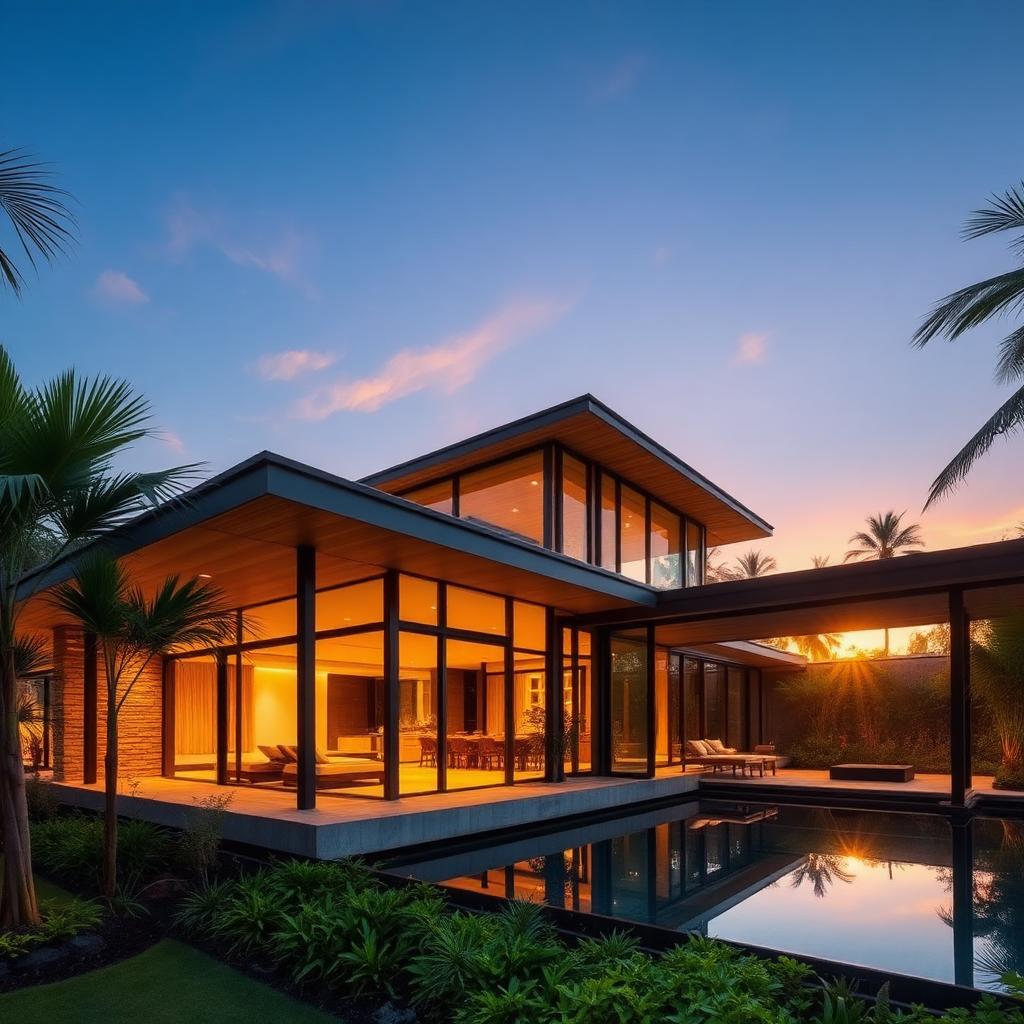
Earth, hemp and dung scale to contemporary architecture — open floor plans, floor-to-ceiling glass, solar roofs and modern comfort. Below: real examples of what natural materials look like when designed for today.
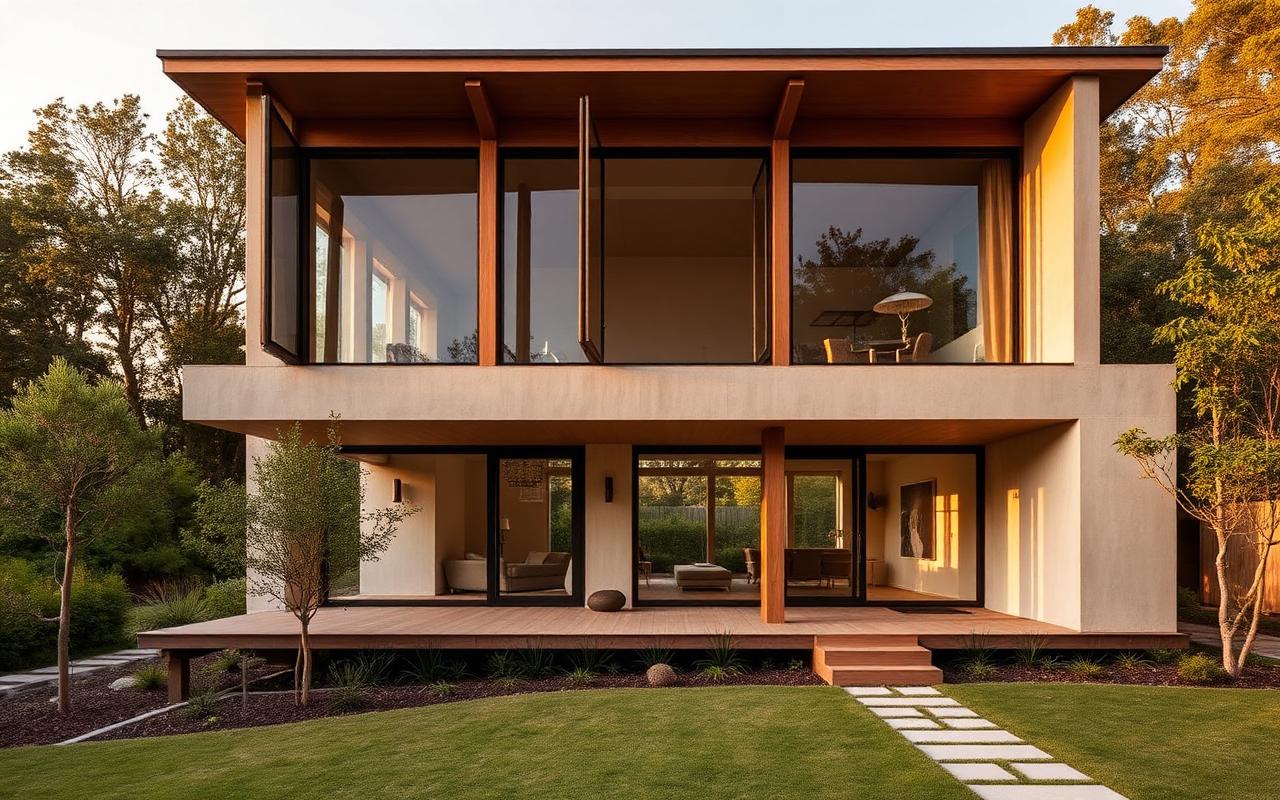
Hempcrete Villa
Two-storey hemp-lime walls, exposed timber frame, floor-to-ceiling glazing.
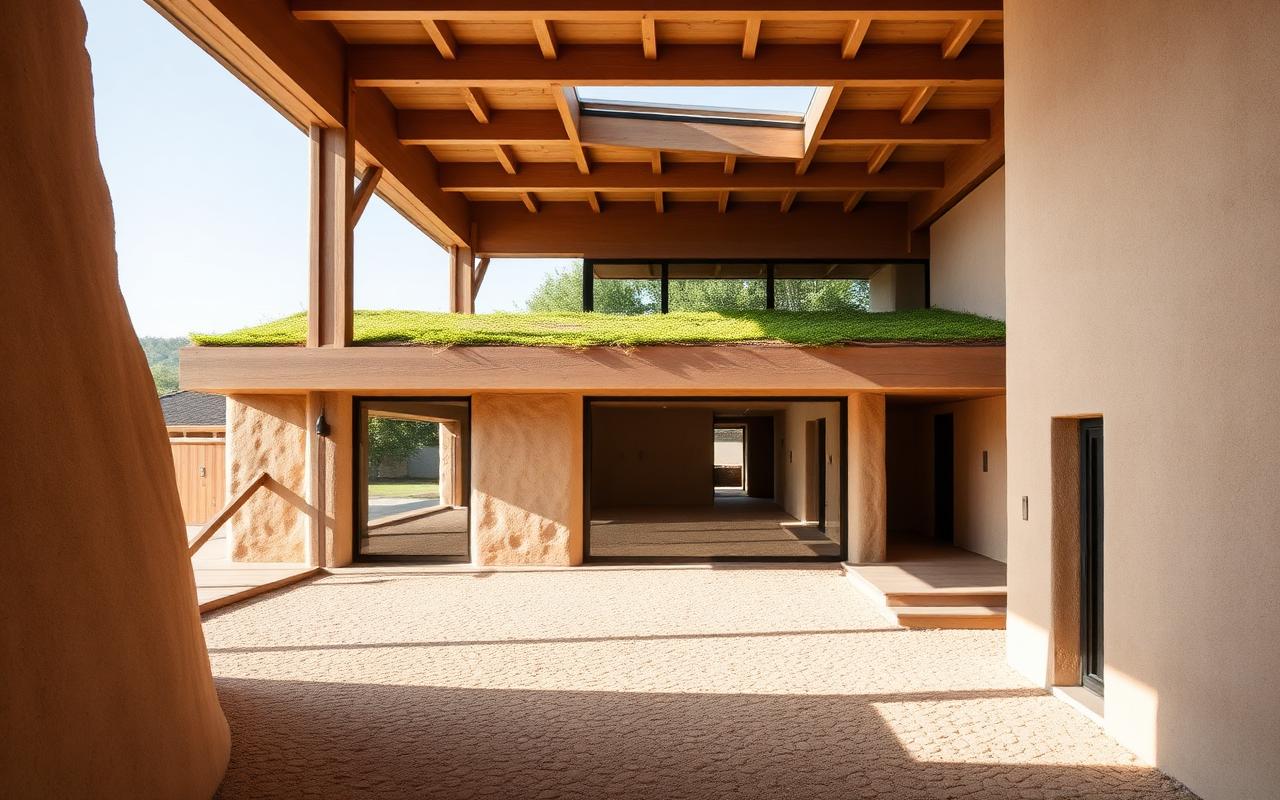
Contemporary Cob House
Sculpted earth walls, green roof, large sliding glass and skylights.
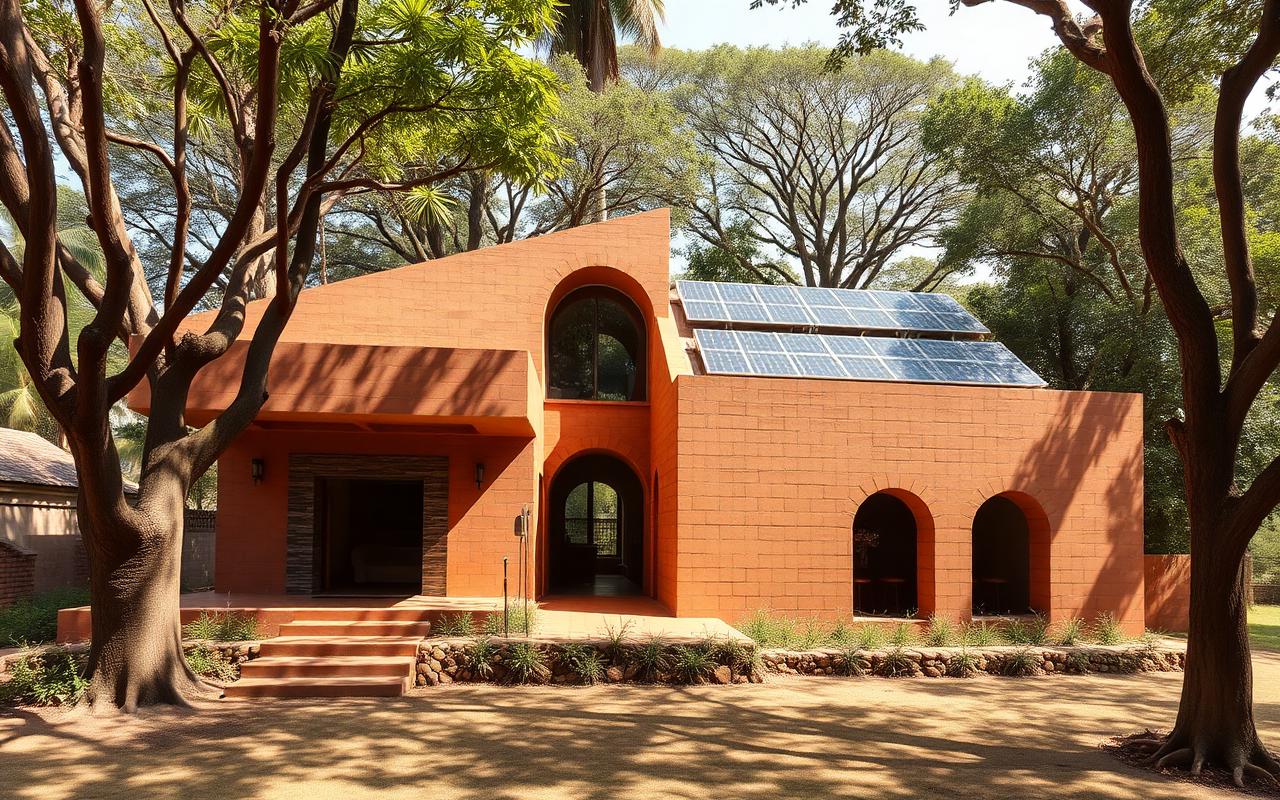
Gocrete Eco Home
Cow-dung brick walls, arched openings, rooftop solar — net-zero living.
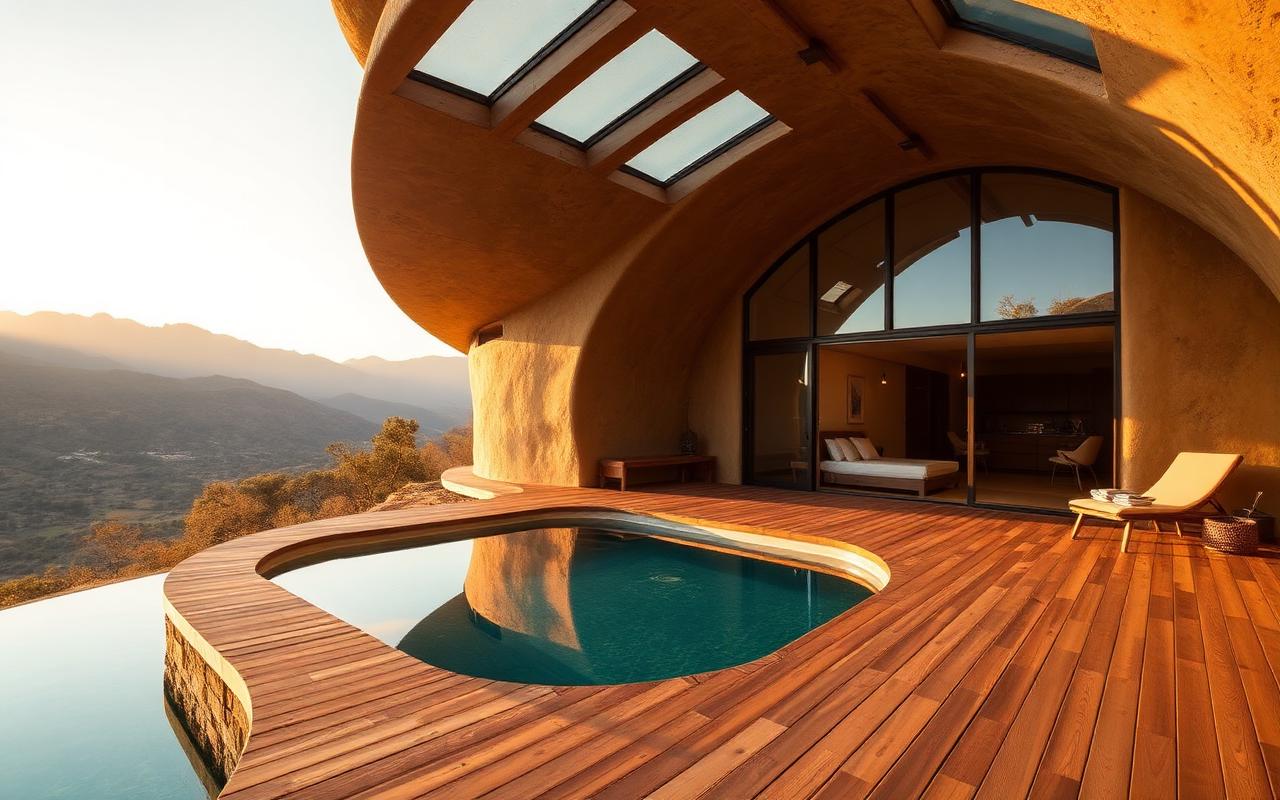
Earth-Walled Retreat
Curved adobe cabin with deck and infinity pool — off-grid by design.
Green steel — one grass, a thousand uses.
Bamboo is the world's fastest growing plant — up to 1 metre a day. It rivals mild steel in tensile strength, regrows from the same rootstock for 100+ years, and supports an industry that already feeds 8 million Indian families. Modern architects from Bali to Bengaluru are using engineered bamboo to build homes, hotels, schools and bridges that out-perform concrete on comfort, carbon and cost.
Fastest growing plant on Earth
Tensile strength of structural bamboo
Harvest cycle (vs 25+ for hardwood)
More O₂ released than equivalent trees
Modern bamboo homes & resorts
Bamboo Glass Villa
Treated bamboo columns with floor-to-ceiling glazing and pool deck.
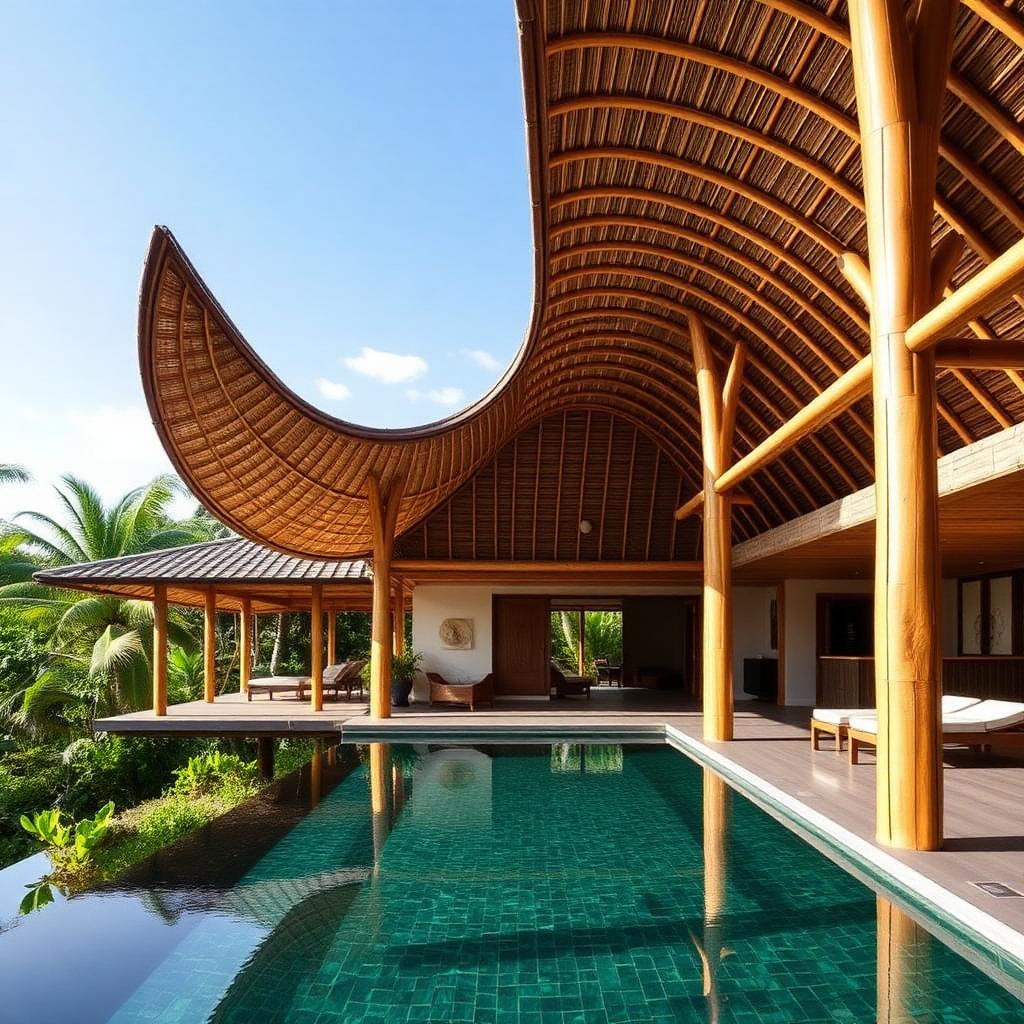
Curved Bamboo Pavilion
Bali-style parabolic bamboo roof on infinity-pool living pavilion.
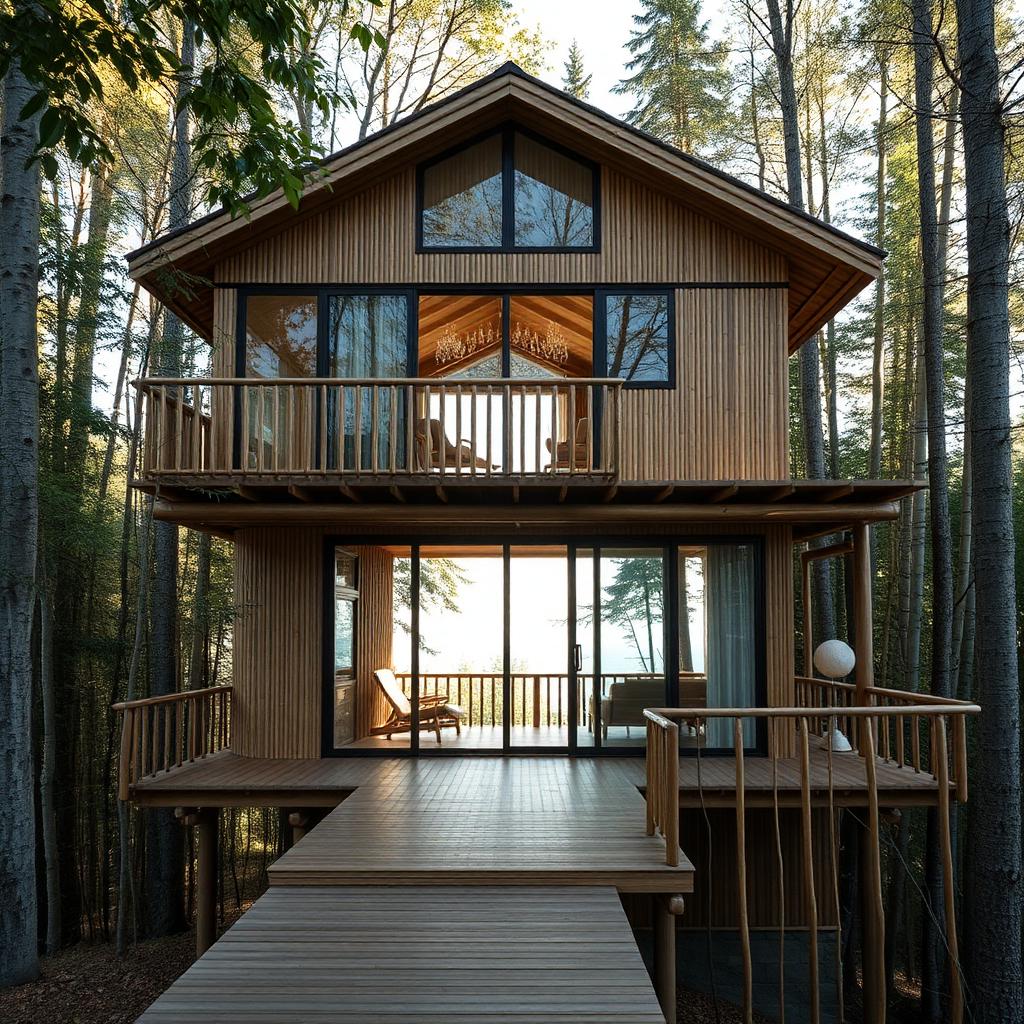
Forest Bamboo Cabin
Two-storey laminated bamboo cabin with full-height glass and deck.
12 industries bamboo serves
- Construction & housing
- Furniture & interiors
- Flooring & laminates
- Bamboo fabric (viscose)
- Paper & packaging
- Food (shoots, pickle)
- Charcoal & activated carbon
- Scaffolding & formwork
- Handicrafts & baskets
- Musical instruments
- Bicycles & sports goods
- Bio-energy & pellets
Economy & livelihood
- ₹26,000+ crore Indian bamboo industry growing ~10% per year
- 8 million+ Indian families earn livelihood from bamboo
- 1 acre of mature bamboo can yield ₹1.5–3 lakh/year
- Global market projected to cross $98 billion by 2030
- Strong export demand: EU, USA, Japan, South Korea, Middle East
- Pre-fab bamboo kits open new jobs for rural women & artisans
Health benefits
- Bamboo fabric is naturally antibacterial, hypoallergenic & breathable
- Bamboo shoots: high protein, low calorie, rich in fibre & potassium
- Bamboo charcoal purifies indoor air, water and absorbs odours
- Bamboo leaf tea is rich in silica — supports bones, hair & skin
- Bamboo flooring doesn't off-gas VOCs like vinyl or laminate
- Living in bamboo homes lowers indoor temperature & noise stress
Nature & climate benefits
- Sequesters up to 12 tonnes CO₂ per hectare per year
- Releases 35% more oxygen than an equivalent stand of trees
- Roots bind soil — proven anti-erosion plant for slopes & riverbanks
- Restores degraded land in 3–4 years; needs no pesticides
- Grows in marginal soils where food crops fail
- 100% biodegradable — zero toxic demolition waste
Best species for building
- • Bambusa balcooa — heavy structural columns, India's workhorse
- • Dendrocalamus stocksii — straight, solid, premium furniture
- • Guadua angustifolia — South American giant, used in Colombia's skyscrapers
- • Moso (Phyllostachys edulis) — laminated boards, flooring
- • Melocanna baccifera — NE India, woven walls & mats
Where bamboo fits best
- • North-East India, Western Ghats, coastal Karnataka, Goa, Kerala
- • Eco-resorts, farmstays, yoga & meditation retreats
- • Schools, anganwadis, community halls, training centres
- • Cyclone & earthquake zones — flexible frames absorb shock
- • Disaster-relief & rapid prefab housing
Planning a natural home?
We connect you with vetted natural builders, training centres and material suppliers across India — mud, hemp and gocrete specialists who've built before.