Jatropha
1,892 L/ha
Drought-resistant shrub, grows on wasteland, non-edible seeds — high biodiesel yield.
Eight plants that can replace fossil fuel — without taking food off anyone's plate. Grown on wasteland, processed in villages, burning cleaner than diesel.

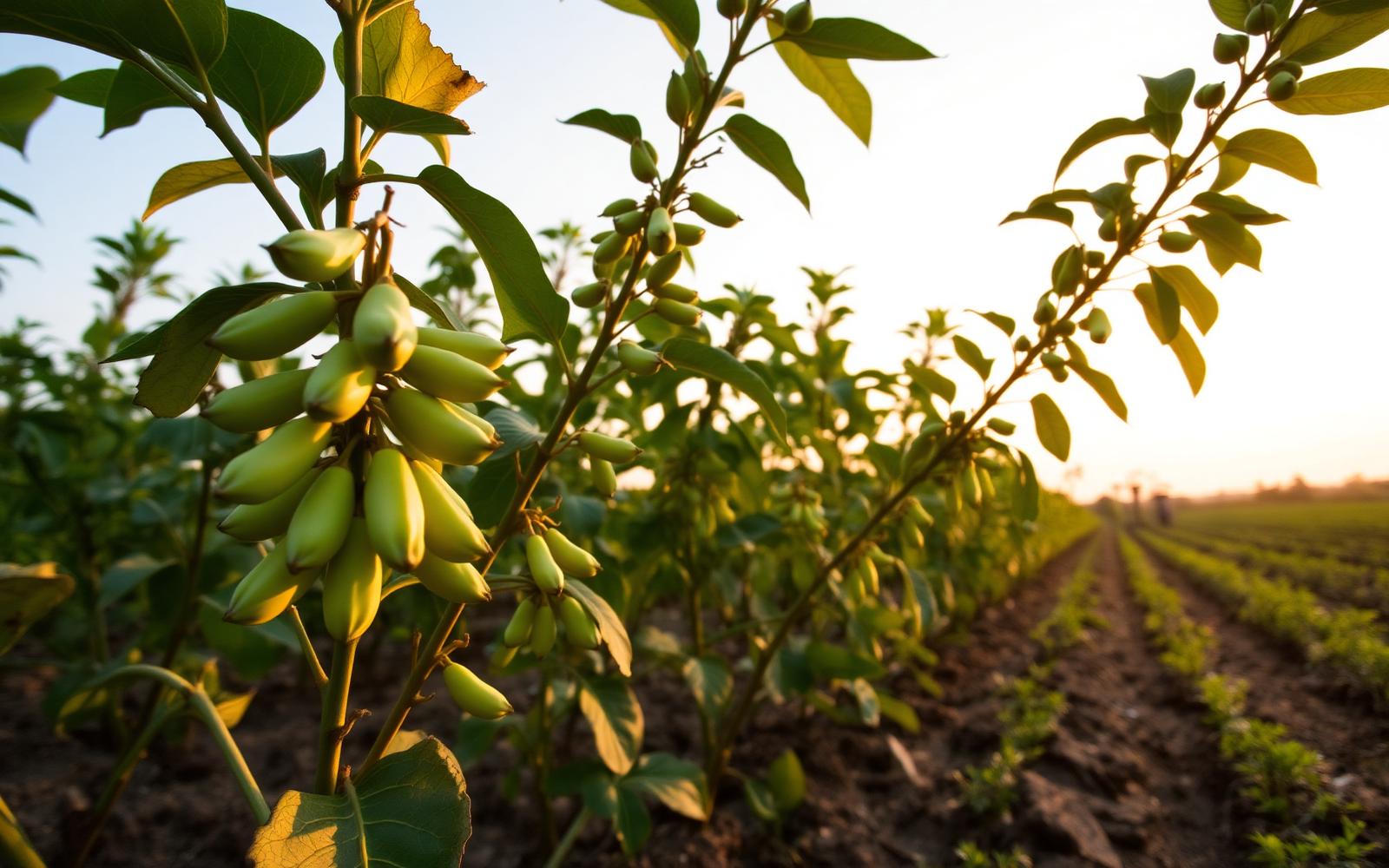
“Energy from the sun, stored in seeds, burned without harm.”
Biofuel is any fuel made from living plants or biological waste — instead of fossilised plants from 300 million years ago. Two main types: biodiesel (from plant oils, runs in diesel engines) and bioethanol (from sugars and starches, blended with petrol).
Because the carbon released comes from plants that just absorbed it, biofuels are essentially carbon-neutral over their life cycle. India has mandated 20% ethanol blending in petrol by 2025 — biodiesel is next.
Yields are approximate annual litres of oil/ethanol per hectare.
Drought-resistant shrub, grows on wasteland, non-edible seeds — high biodiesel yield.
Native Indian tree, nitrogen-fixing, lives 100+ years. Karanj oil → biodiesel + pesticide.
Sacred Indian tree. Seeds yield oil for biodiesel + powerful natural pesticide.
Tribal livelihood tree. Flowers used in food, seeds give clean-burning oil.
Fast-growing crop. Oil works at low temperatures — ideal for aviation biofuel.
Highest ethanol yield. Blended into E20 petrol across India today.
30x more productive than land crops. Grown in tanks on saltwater, sewage, even rooftops.
By-product of hemp cultivation. Hemp seed oil → clean burning diesel substitute.
Mature seeds collected, sun-dried 7 days, de-hulled by hand or huller.
Mechanical expeller press extracts the raw vegetable oil.
Oil + methanol + KOH catalyst → splits into biodiesel + glycerin.
Biodiesel washed with water, dried, filtered. Ready to pump.
Run pure (B100) or blended with diesel (B20). Glycerin → soap & cosmetics.
Plants absorb the CO₂ that biodiesel releases — closed loop
Jatropha & Pongamia thrive on degraded, unirrigated land
Cultivation + extraction creates village-level livelihoods
Most diesel engines run on B20 (20% biodiesel) with zero modification
Biogas is 55–65% methane produced when bacteria digest organic waste in the absence of oxygen. One cow's daily dung can cook two meals. A village's waste can run a 5 kW generator. The leftover slurry is the richest free fertiliser known to farming.
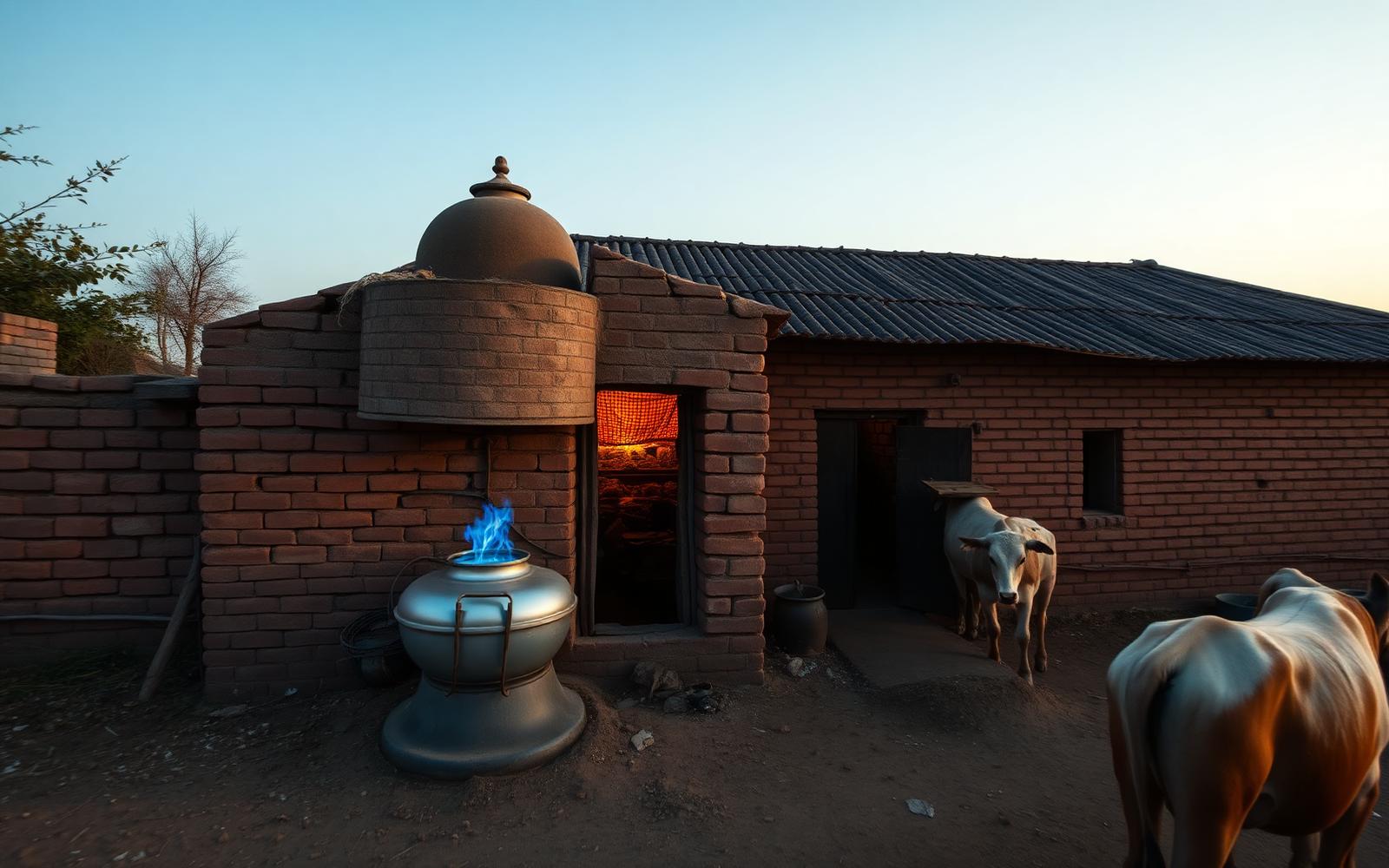
Classic gobar gas. 4–6 cows feed a household plant.
Urban gold — peels, leftovers, expired food.
Straw, husk, leaves — shred before feeding.
High nitrogen — mix with carbon waste for balance.
Industrial-scale CBG plants run on this.
Dedicated energy crop — 40+ tonnes/ha/year.
Feedstock blended 1:1 with water in the inlet chamber to a slurry consistency.
Sealed digester, 30–40°C, methanogenic bacteria break organics for 30–45 days.
CH₄ (55–65%) + CO₂ rises into a fixed dome or floating drum holder.
Spent slurry exits — nitrogen-rich liquid fertiliser ready for fields.
Pipe to stove, lamp, generator. Compress (CBG) for vehicles or bottling.
1 m³ ≈ 2 hours on a single burner — replaces LPG entirely for a household
1 m³ ≈ 1.25 kWh via a small gas genset
Compressed Bio-Gas runs CNG vehicles — India targets 5,000 CBG plants by 2030
Output is 2–3× richer in N-P-K than raw dung — zero waste loop
| Plant | Capex | Feed needed | Output | Best fit |
|---|---|---|---|---|
| 1 m³ household | ₹18k–25k | 20 kg dung/day | Cooking for 4 people | Single farming family with 3–4 cattle |
| 4 m³ community | ₹70k–90k | 80 kg mixed waste/day | Cooking for 4–6 families | Hamlet, gaushala, ashram |
| 25 m³ village | ₹4–6 L | 500 kg/day | Stove + 5 kW genset | Village dairy co-op, school, panchayat |
| Commercial CBG | ₹15–25 Cr | 100+ TPD | Bottled CBG + organic manure | Sugar mill, large dairy, municipal waste |
MNRE subsidies cover up to 40% of household plant cost under the New National Biogas & Organic Manure Programme. Payback for a 1 m³ plant: 2–3 years on LPG savings alone.
The same cow that fuels your stove can plaster your walls. Explore mud houses, hempcrete and gocrete in our natural building guide.
Jatropha to Biodiesel
Complete village-scale process
Algae Biofuel Explained
The fuel of the future?
India's Ethanol Push
From sugarcane to E20 petrol
Household Biogas Plant
Build and operation of a home gobar gas dome
Compressed Bio-Gas (CBG)
From farm waste to vehicle fuel
We help landowners and farmer co-ops set up Jatropha, Pongamia and Mahua plantations — with buyback agreements for the harvested seed.